Complete Travel Guide · 2025 Edition
Travelling in Coastal Karnataka
Beaches, Temples, Food, Culture & Hidden Gems along India’s most beautiful coastline
Introduction: Where the Ghats Meet the Arabian Sea
There are some places in India that don’t scream for attention. They don’t feature in flashy advertisements or clutter your Instagram explore page with clichéd tourist selfies. They simply exist — quietly beautiful, deeply spiritual, wildly delicious, and completely irresistible to anyone lucky enough to stumble upon them. Coastal Karnataka is one such place.
Stretching along the western edge of the Deccan Plateau, Coastal Karnataka — often called the Karavali region — runs for roughly 320 kilometres along the glittering Arabian Sea. It covers three major districts: Uttara Kannada in the north (home to Gokarna and Karwar), Udupi in the middle (the land of temples and neer dosa), and Dakshina Kannada (or Mangaluru) in the south, where the food alone is worth flying across the country for.
To the east, the mighty Western Ghats rise dramatically, draped in thick forests and monsoon mist. To the west, the Arabian Sea crashes against golden beaches, ancient forts, and rocky shores. Sandwiched between these two spectacular natural features, Coastal Karnataka has somehow managed to keep its charm intact — blissfully unhurried and magnificently real.
The region receives some of the heaviest monsoon rainfall in India — over 3,000 mm annually — which means the landscape is an almost obscene shade of green for most of the year. The paddy fields shimmer. The rivers swell. The waterfalls thunder. And the seafood, well, the seafood achieves a kind of transcendence that no menu description can quite capture.
Whether you are a devout pilgrim seeking blessings at ancient temples, a beach lover chasing sunsets, a food traveller on an eternal quest for the perfect fish fry, or simply someone who wants to sit in a coconut grove doing absolutely nothing — Coastal Karnataka has got you covered. Let this Coastal Karnataka travel guide be your companion through one of India’s most underrated and soul-stirring journeys.
Best Places to Visit in Coastal Karnataka
🕌 Udupi — The Spiritual and Culinary Capital
Begin your journey in Udupi, a town so devout it decided centuries ago that even its cuisine should be a form of worship. Udupi is the home of the world-famous Udupi vegetarian cuisine — a tradition born in the kitchens of temple priests who cooked without onion or garlic and somehow made it taste like heaven. The Sri Krishna Temple stands at the heart of town, drawing thousands of pilgrims every day and filling the air with the scent of flowers, incense, and ghee-soaked devotion.
Beyond the temple, Udupi offers Kaup Beach, Malpe Beach, and the stunning St. Mary’s Island — a UNESCO-listed geological marvel just a short boat ride away. The town itself is compact, friendly, and incredibly walkable. And everywhere you turn, someone is serving a hot plate of neer dosa with coconut chutney that will ruin you for all other food forever.
🏙️ Mangalore (Mangaluru) — The City That Lives to Eat
Let’s be honest: people come to Mangalore primarily to eat. Not that the city lacks in other attractions — it has lovely beaches at Panambur and Tannirbhavi, the beautiful Kadri Manjunath Temple, the St. Aloysius Chapel with its breathtaking European-style frescoes, and a buzzing port city energy. But the food. Oh, the food.
Mangalore is where Chicken Ghee Roast was invented, where fish fry is practically a competitive sport, and where you will find Pabbas Ice Cream — a legendary parlour that has been serving Gadbad ice cream and parfait since 1969. A trip to Mangalore without visiting Pabbas is legally and morally questionable. Plan accordingly.
The city blends Tulu, Konkani, and Kannada cultures in a unique way, making even a casual walk through the old neighbourhoods feel like a living cultural documentary.
🌊 Gokarna — The Hippie Pilgrim’s Paradise
Few places in India manage the impossible: being genuinely sacred and genuinely chilled-out at the same time. Gokarna pulls it off with effortless grace. This small temple town in Uttara Kannada is home to the ancient Mahabaleshwar Temple, one of the most important Shiva shrines in South India. And just a short hike beyond the temple town lies a string of beaches — Om Beach, Kudle Beach, Half Moon Beach, Paradise Beach — each more spectacular than the last.
Om Beach gets its name because when viewed from above, its twin crescent shape resembles the Sanskrit symbol for “Om.” You’ll find local fishermen selling fresh coconuts next to backpackers in hammocks, and somehow it all makes perfect sense. Gokarna is the kind of place where time becomes optional.
⛩️ Murudeshwar — Where Shiva Watches the Sea
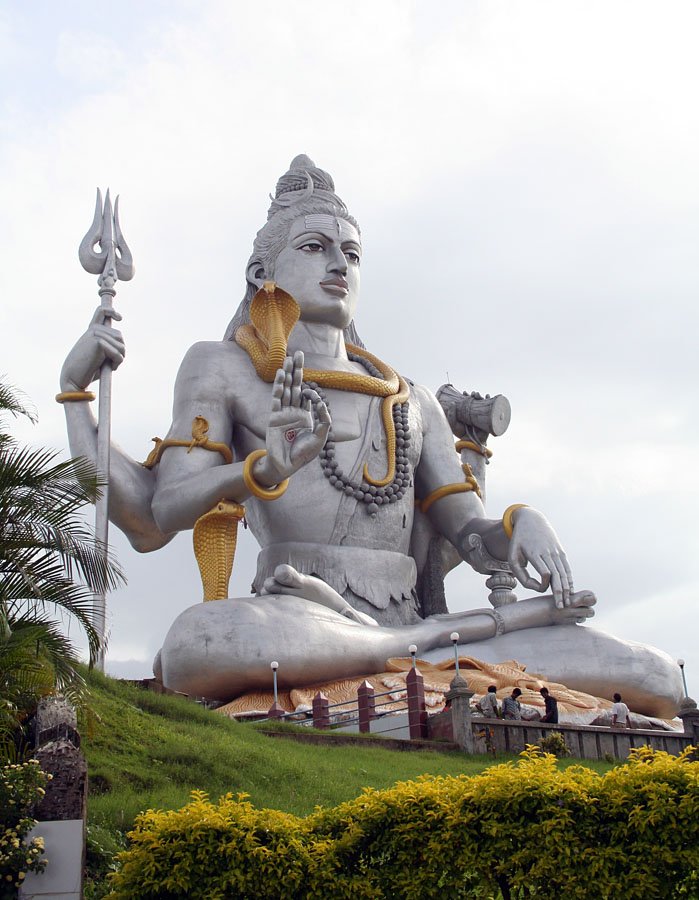
Standing on a rocky promontory jutting into the Arabian Sea, the Murudeshwar Shiva Temple is one of the most visually dramatic sights in all of Karnataka. The 20-storey Raja Gopura (temple tower) is the second tallest temple tower in the world, and from its summit you can see the massive statue of Lord Shiva — all 123 feet of it — gazing serenely out over the ocean.
The beach here is clean and lovely, the sunsets are spectacular, and the combination of religious grandeur and natural beauty makes Murudeshwar genuinely unforgettable. There’s also a good scuba diving spot nearby for those who like their spiritual experiences to include colourful fish.
🌴 Karwar — Karnataka’s Most Peaceful Beach Town
Karwar sits right at the border of Karnataka and Goa, and it has the best of both worlds — Goa’s beach beauty without Goa’s weekend crowds or Goa’s prices. Rabindranath Tagore was so enchanted by Karwar that he wrote about it. The town has pristine beaches, an old Portuguese fort, beautiful islands, and a naval museum. It’s the kind of place where you can sit on a beach with absolutely nothing to do and feel, inexplicably, very productive.
🏖️ Maravanthe Beach — The Beach with a River On One Side
Imagine driving along NH-66 and suddenly realising you have the Arabian Sea on your left and the Souparnika River on your right, with just a thin strip of road between them. That is Maravanthe Beach — possibly the most photogenic stretch of road in India. It’s not overhyped; it’s genuinely that remarkable. Pack a good camera (or just stand there with your mouth open, which is equally valid).
🗿 St. Mary’s Island — Nature’s Sculpture Garden
About 6 km off the coast of Malpe, St. Mary’s Island is famous for its extraordinary hexagonal basalt rock formations — the result of volcanic activity millions of years ago. Vasco da Gama reportedly landed here in 1498 and planted a cross, hence the name. Today, a ferry ride from Malpe gets you to this stunning geological wonder. The combination of crystalline waters, unique rock formations, and the wild, windswept atmosphere makes it feel like another planet — a very beautiful, very geological planet.
🌅 Kaup Beach and Lighthouse
Just 12 km from Udupi, Kaup Beach is known for its 150-year-old lighthouse that still guides ships along the coast. Climb to the top for panoramic views of the coastline, coconut groves, and the glittering sea below. The beach itself is rocky in parts, sandy in others, and always, always beautiful at sunset. It’s the kind of beach that makes you want to write poetry even if you’ve never tried before.
🎣 Malpe Beach — The Beach That Has Everything
Malpe Beach near Udupi is one of the most complete beach experiences on this coast. It has water sports, clean sands, fishing boats, a harbour full of colourful vessels, and easy access to St. Mary’s Island. The beach is wide, the sunsets are reliable, and the local coconut vendors are suspiciously good at appearing the exact moment you think you’re thirsty.
💧 Jog Falls — Karnataka’s Crown Jewel of Waterfalls
Technically on the edge of coastal Karnataka’s hinterland, Jog Falls in Shimoga district is a must-visit when travelling this region. The Sharavathi River plunges in four separate streams from a height of 253 metres, making it India’s second-highest waterfall. During the monsoon, it becomes a roaring, thundering, spray-drenched spectacle that will make you feel very, very small and very, very alive simultaneously.
🌿 Agumbe — The Rainiest Place in South India
Agumbe, perched in the Western Ghats above Udupi, is famously called the “Cherrapunji of the South.” It receives over 8,000 mm of rain annually, making its forests improbably lush. It’s a biodiversity hotspot — home to the king cobra, rare birds, and the ARRS (Agumbe Rainforest Research Station). The drive up the ghats itself is one of those experiences that makes your jaw drop every 30 seconds. Sunset from Agumbe viewpoint is legendary. Bring a raincoat. Seriously.
🦀 Kundapura and Honnavar — The Quiet Gems
Kundapura, between Mangalore and Udupi, is known for its unique Kundapur-style fish curry (a specific spice combination that locals will describe as “our style” with enormous pride), backwaters, coconut groves, and a relaxed pace that feels like someone put the whole town on a slow cooker. Honnavar, further north, has the lovely Kasarkod Beach, beautiful backwaters, and the fascinating Idagunji Ganapathi Temple. These towns are what you visit when you want real Coastal Karnataka, unfiltered.
The NH-66 (formerly NH-17) runs along the coast connecting all these destinations. A Coastal Karnataka road trip on this highway is one of the finest drives in India — coconut palms on both sides, the sea occasionally winking at you from the left, and the aroma of local restaurants beckoning every 10 km.
Temples in Coastal Karnataka — A Spiritual Odyssey
Coastal Karnataka is not merely a geography — it is a sacred landscape. The temples here are not just places of worship; they are living institutions that have shaped the region’s culture, cuisine, art, and identity for over a thousand years. Here is where the spiritual heart of this coast beats loudest.
🙏 Udupi Sri Krishna Temple
The Udupi Sri Krishna Temple is the religious and cultural epicentre of coastal Karnataka. Founded by the philosopher-saint Madhvacharya in the 13th century, this temple follows a unique tradition of worshipping Lord Krishna through a window with nine holes — the Kanakana Kindi — a practice that dates back to the legendary devotee Kanakadasa. The temple complex is constantly alive with chanting, processions, and the beautiful rhythms of devotion.
Eight monasteries (ashta mathas) surrounding the temple take turns managing its affairs in a system called Paryaya, which rotates every two years and is celebrated with a massive festival. The temple’s kitchen feeds thousands every day. The energy here — simultaneously peaceful and electric — is something you cannot explain; you can only experience it.
🏔️ Kollur Mookambika Temple
Nestled in the Western Ghats about 146 km from Mangalore, the Kollur Mookambika Temple is dedicated to the goddess Mookambika — a form of Parvati. The setting is extraordinary: dense forests, the Sauparnika River, misty mountains, and the constant sound of flowing water. This is a major pilgrimage destination, and the trek up Kodachadri Peak nearby (for the adventurous pilgrims who like their spirituality with an elevation gain) is truly spectacular.
💫 Kateel Durga Parameshwari Temple
The Kateel Durga Parameshwari Temple, located on an island in the Nandini River near Mangalore, is one of the most uniquely situated temples you will ever visit. The approach to the island-temple, surrounded by water and lush vegetation, creates an atmosphere that is genuinely enchanting. The goddess here is believed to be particularly powerful, and the faith of the devotees who come from across Karnataka and Kerala is palpable and moving.
⚖️ Dharmasthala — Where Religion Meets Service
Dharmasthala is a remarkable institution — a temple town that is simultaneously Hindu, Jain, and has a Christian family managing its administration. The Manjunatheshwara Temple here receives lakhs of visitors annually, and the town runs a massive charitable enterprise including free meals, hospitals, and educational institutions. The 39-feet Bahubali statue is impressive. But it is the spirit of seva (selfless service) that truly defines Dharmasthala — an idea so pure it makes cynics believe in humanity again.
🌊 Murudeshwar Shiva Temple
As mentioned earlier, the Murudeshwar Shiva Temple is more than a religious site — it is a visual spectacle. Standing before the 123-foot Shiva statue against the backdrop of the Arabian Sea, you feel simultaneously tiny and strangely uplifted. The temple has been modernised with high-tech additions (including life-size tableau replicas of scenes from the Mahabharata underground), making it appealing to a wide range of visitors. The entry to the tower (for panoramic views) is well worth the climb.
🕉️ Gokarna Mahabaleshwar Temple
The Gokarna Mahabaleshwar Temple houses the Atmalinga — the primal Shiva lingam believed to have been brought from Kailash by Ravana and set down here by Ganesha through divine trickery. This makes Gokarna one of the most ancient and important Shiva pilgrimage centres in India. The temple follows strict Vedic traditions, and the experience of praying here — surrounded by the sound of the sea, the chanting of priests, and the smell of jasmine — is profoundly moving.
Food of Coastal Karnataka — A Journey Worth Every Calorie
We need to talk about the food. Not politely, not briefly, not with appropriate journalistic detachment — but with the kind of breathless enthusiasm that is the only honest response to Coastal Karnataka’s cuisine. This is a region that takes eating seriously. Religiously, even. (Quite literally, in the case of Udupi.)
🍗 Chicken Ghee Roast
If Coastal Karnataka had a national dish, it would be Chicken Ghee Roast. This incandescent red preparation — chicken slow-cooked in a fiery blend of Byadgi chillies (which give colour without excessive heat), tamarind, garlic, and finished generously in ghee — was created at Shetty Lunch Home in Kundapura and later perfected and popularised in Mangalore. It is simultaneously spicy, tangy, rich, and addictive. One serving is never enough. Two servings is still not enough. The third serving is when you quietly make peace with the fact that you will need to walk approximately 14 km tomorrow.
🥞 Mangalore Buns
Do not let the name fool you. Mangalore Buns are not buns in any conventional sense. They are deep-fried sweet-savoury rotis made with ripe bananas — puffed, golden, slightly sweet, slightly chewy, and utterly addictive. They are typically eaten for breakfast with coconut chutney and sambar. If you order one and think it is not enough, you are absolutely right.
🌾 Neer Dosa
The name literally means “water dosa” — because the batter is simply rice soaked and ground with water, no fermentation required. The result is a thin, lacy, snow-white crepe that is silky and delicate and disappears from your plate almost faster than it appears. Eaten with coconut milk, fish curry, or just chutney, neer dosa is the culinary equivalent of a deep breath: simple, pure, and deeply satisfying.
🐔 Kori Rotti
Kori means chicken in Tulu, and Rotti here refers to crisp, sun-dried rice wafers. The combination — a spicy chicken curry poured generously over those crackling rice wafers until they soak up all that magnificent flavour — is the definitive Tulu Nadu experience. It is simultaneously crunchy and soft, spicy and comforting, and eating it feels like a cultural initiation that earns you the right to say you’ve truly been to coastal Karnataka.
🐟 Fish Fry, Kane Fish, and Prawn Curry
The seafood of coastal Karnataka deserves its own chapter, possibly its own book. Kane fish (Lady Fish) — lightly spiced and shallow-fried in a semolina crust — is a local obsession. The prawn curry, cooked in a coconut-based gravy with local spices, is deeply aromatic and complex. A crab masala that has been slow-cooked in a pot for hours will make you lick your fingers shamelessly in public without a single regret. Seafood here is eaten fresh, cooked simply (because it doesn’t need much help), and served either on steel plates or, in some glorious establishments, on banana leaves — which somehow makes everything taste even better. It is not scientifically proven that banana leaf improves food, but the evidence is overwhelming.
🍧 Pabbas Ice Cream — Mangalore’s Most Famous Address
Pabbas Ice Cream in Mangalore is not just an ice cream shop. It is a pilgrimage. Established in 1969 on Ballalbagh, Pabbas has been serving generations of Mangloreians and tourists with their legendary Gadbad ice cream — a layered concoction of ice cream, jelly, fresh fruits, nuts, and rose syrup, assembled in a tall glass with the kind of cheerful chaos that the name “Gadbad” (which means confused) perfectly captures. The Parfait is equally famous. Go early. There will be a queue. The queue is worth it. Everything is worth it.
🥗 Udupi Vegetarian Cuisine
For those who don’t eat seafood, do not despair — Udupi vegetarian cuisine will take extraordinarily good care of you. The no-onion, no-garlic cooking tradition developed in Udupi temple kitchens over centuries has given the world classics like sambar, rasam, kootu, and upkari (a dry vegetable preparation), along with an array of chutneys, pickles, and sweets. A traditional Udupi meal served on a steel plate is a masterclass in balance, flavour, and nutrition.
🙌 Temple Prasadam
One of the most remarkable food experiences in coastal Karnataka costs nothing and gives everything — the prasadam served at the major temples. At Dharmasthala, free meals are served to thousands of pilgrims daily without any discrimination of caste, religion, or status. At Udupi Krishna Temple, the panchamruta (a sacred blend of five ingredients) and other temple offerings carry a sweetness that is as much spiritual as it is culinary. Eat it with gratitude. That is the only recipe needed.
Carry antacid tablets. Not because the food is bad — it is extraordinary — but because you will inevitably eat more than your body has capacity for, powered purely by enthusiasm and the knowledge that you might not be back for a while. Plan a beach walk after every major meal. Your stomach will thank you. Your soul already did.
🍦 Local Eateries and Highway Dhabas
Some of the best meals on this coast are served in small, unassuming establishments with plastic chairs, ceiling fans, and no Instagram presence whatsoever. Highway eateries on NH-66 — family-run places where a woman in a cotton saree ladles fish curry from a massive pot — serve food that would receive Michelin stars if only Michelin knew about them. Do not pass these by. The signboard will be small. The food will be immense.
Beaches and Scenic Drives — The Coast in All Its Glory
A Coastal Karnataka road trip is an experience unto itself. NH-66 threads along the coast like a ribbon connecting pearls — each town, each beach, each river crossing a new revelation. The drive, especially in the post-monsoon months of October and November, is almost aggressively beautiful: the road lined with coconut palms, the paddy fields still green, the rivers full, and the sea a dazzling blue on the horizon.
Sunsets and Silhouettes
Coastal Karnataka does sunsets magnificently. The sky over the Arabian Sea doesn’t just change colour at dusk — it puts on an entire theatrical production. Oranges become reds become purples, and the silhouettes of fishing boats on the water add a perfectly cinematic element. Om Beach, Malpe Beach, Murudeshwar, and Kaup Lighthouse are particularly spectacular sunset venues. Arrive 30 minutes early. Bring someone you like. You won’t need to say much.
The Monsoon Magic
Contrary to popular belief, the monsoon season (June–September) is one of the best times to experience coastal Karnataka — if you’re not planning beach swimming. The landscape transforms into an almost impossibly vivid green. Waterfalls appear on every hillside. The air smells of wet earth and rain-soaked flowers. The rivers run full and fast. The coast is dramatic and moody. And the seafood restaurants are quieter, meaning you get a table faster. The Agumbe sunset, if you catch a brief clear window, is ethereal during this season.
Fishing Culture and Morning Fish Markets
Set an alarm for 5:30 AM at least once on your trip, drag yourself out of bed (it will be worth it), and head to a local fish market — Mangalore’s Bunder fish market is legendary. Fishing boats come in at dawn, and the market erupts into organised chaos as the catch is sorted, auctioned, cleaned, and sold. The smells are intense, the energy is tremendous, and the fish is as fresh as it gets anywhere in the world. This is the unglamorous, beautiful heart of coastal Karnataka’s food culture.
Small Tea Shops by the Beach
There is something perfect about a small kadak chai (strong tea) at a tiny shop right at the edge of a beach, watching the waves come in. These little establishments — often just a wooden shack with a kerosene stove and a battered thermos — exist at almost every major beach on the coast. They charge ₹10–15 for a cup that contains approximately 80% of your daily happiness requirement. Seek them out.
Local Culture and Lifestyle — The Heartbeat of the Coast
🎭 Yakshagana — Theatre Like No Other
Yakshagana is the classical dance-drama of coastal Karnataka, and it is one of the most spectacular art forms you will ever witness. Performers in enormous, elaborate costumes — towering headdresses, glittering face paint, swirling skirts — enact stories from Hindu mythology against a backdrop of rapid percussion and lyrical singing. Performances often last through the night, fuelled by the energy of the artists and the devotion of the audience. The costume-making and makeup traditions of Yakshagana are intricate arts in themselves. If there is a performance anywhere near your route, do not miss it.
🏡 Tulu Culture and Konkani Influence
Coastal Karnataka is home to multiple cultural streams that have coexisted and influenced each other for centuries. The Tulu-speaking community of Mangalore and Udupi has one of the oldest and richest folk traditions in India, including unique festivals, rituals, and the fascinating Bhuta Kola — a spirit-possession ritual that combines folk theatre, worship, and community justice in a single extraordinary event. The Konkani community (primarily in the Karwar region) brings another cultural thread, particularly in music, food, and architecture. The result is a coast that is culturally layered and infinitely interesting.
🏠 Traditional Houses and Architecture
The traditional houses of coastal Karnataka — with their sloping terracotta roofs designed to shed the heavy monsoon rain, wide verandahs, central courtyards, and intricate woodwork — are architectural masterpieces suited perfectly to the climate. Many old families still live in these homes, and some have been converted into heritage stays. Spending a night in one of these homes, listening to the rain drumming on the old roof tiles, is as authentic a travel experience as this region offers.
😊 The People — The Region’s Greatest Asset
Coastal Karnataka’s greatest attraction is not any beach or temple or dish — it is the people. Warm, hospitable, unpretentious, and genuinely proud of their home, they will go out of their way to help a traveller, recommend a restaurant, explain a temple ritual, or simply share a smile. In a country that sometimes moves at a frantic pace, the people of coastal Karnataka carry about them a gentle, grounded contentment that is deeply infectious.
Practical Travel Tips for Coastal Karnataka
📅 Best Time to Visit
- October to February — Ideal. Perfect weather, clear skies, full rivers from the monsoon, and lush green landscapes. Beaches are clean and safe.
- March to May — Hot and humid, but good for beach swimming before the monsoon. Some festivals happen in this period.
- June to September (Monsoon) — Not ideal for beaches but absolutely spectacular for waterfalls, forests, and the raw beauty of the coast. Avoid if you’re prone to motion sickness on ghat roads.
🚂 Getting There
- By Air: Mangalore International Airport connects to major Indian cities and several international destinations. Hubli Airport serves the northern region.
- By Train: The Konkan Railway is one of India’s most scenic rail routes, running along the coast with spectacular views. Trains from Mumbai, Goa, and other cities stop at Mangalore, Udupi, Karwar, Gokarna Road, and Honnavar.
- By Road: NH-66 connects the entire coast. Mangalore is 350 km from Bangalore via NH-75 over the Western Ghats — a beautiful drive in itself.
💰 Budget Tips
- Stay in guesthouses near temples — they are clean, safe, and often absurdly inexpensive.
- Eat at local “meals” hotels (the ones with no menu boards and fixed thali) for outstanding food at prices that will make you feel slightly guilty.
- Use local buses between towns — they are frequent, cheap, and give you an authentic local experience.
- Book temple accommodation (dharamshalas) in advance for pilgrimage sites — they are often free or nominally priced.
🎒 What to Pack
- Light cotton clothes (the humidity demands it)
- A raincoat or compact umbrella — even outside monsoon, sudden showers happen
- Good walking sandals — many temple precincts require removing shoes frequently
- Sunscreen, insect repellent, and yes, antacid tablets (you will thank us)
- A modest set of clothes for temple visits (covered shoulders and below-knee length)
- Cash — many small restaurants and local shops don’t accept cards
🗺️ Suggested 7-Day Itinerary
Arrive in Mangalore. Explore Panambur Beach, visit Kadri Manjunath Temple, and have dinner at a local seafood restaurant. End the day with Gadbad ice cream at Pabbas. Probably order seconds.
Drive to Udupi. Visit Sri Krishna Temple at dawn. Breakfast: Mangalore buns and neer dosa. Visit Malpe Beach, take a ferry to St. Mary’s Island. Evening at Kaup Beach Lighthouse for sunset.
Morning drive to Kollur Mookambika Temple. Continue to Murudeshwar — visit the temple, marvel at the Shiva statue, watch the sunset over the sea.
Drive to Gokarna. Visit Mahabaleshwar Temple. Spend the afternoon at Om Beach and Kudle Beach. Watch the sun go down over the Arabian Sea. Feel very at peace with everything.
Drive to Karwar — visit the beach, Devbag Island (if time permits). Continue to Honnavar for the evening. Explore the backwaters. Eat like a local.
Drive to Jog Falls (pre-plan if visiting in peak season). Afternoon drive to Agumbe. Sunset from the viewpoint if weather permits. Spend the night surrounded by forest sounds.
Drive to Dharmasthala for the temple experience. Afternoon at Kateel Durga Parameshwari Temple. Return to Mangalore for departure. Stop for one last fish fry. You deserve it.
The coastal highway NH-66 can get narrow and winding in sections. Drive carefully, especially after dark. Start your temple visits early (before 8 AM) to avoid both crowds and heat. Most temples get very crowded on weekends and festival days.
Why Every Traveller Must Visit Coastal Karnataka
Coastal Karnataka is not an easy place to leave. Not because of logistical difficulties, but because the region has a way of settling into you — quietly, gradually, and then all at once. You arrive a tourist. You leave something more: someone who has stood before a giant Shiva on a rocky promontory watching the sun sink into the sea, who has eaten fish curry with their hands from a banana leaf while a ceiling fan turns slowly overhead, who has watched a Yakshagana performance until midnight and felt the drumbeats in their chest, who has walked a lonely beach at dawn and felt, for a moment, that the world is exactly the right size.
In an era of over-tourism, Coastal Karnataka remains blessedly genuine. Its beaches are not packed to capacity. Its temples are lived-in and spiritually alive. Its food has not been dumbed down for tourist palates. Its people are warm without being performative about it. And its landscapes — those staggering, layered landscapes of sea and ghats and river delta and coconut grove — remain as spectacular as they must have looked to the first human who wandered here thousands of years ago and decided, sensibly, to stay.
Whether you come for the temples, the beaches, the ghee roast, the waterfalls, or the simple pleasure of driving a coastal highway with the windows down and the sea breeze in your face — you will not be disappointed. You will, in fact, be the kind of overwhelmed that makes you immediately start planning your return journey before you’ve even left.
Go. Soon. Take someone you love, or go alone and fall in love with the coast itself. Either way, Coastal Karnataka is waiting — patient as the tides, warm as ghee on fresh rotti, and more beautiful than any brochure could ever prepare you for.
Frequently Asked Questions (FAQs)
Q1. What is the best time to visit Coastal Karnataka?
October to February is the best time to visit Coastal Karnataka. The weather is pleasant, the beaches are clean, and all tourist attractions are fully accessible. The monsoon months (June–September) are spectacular for nature lovers and waterfall enthusiasts but not ideal for beach activities.
Q2. How many days are enough for a Coastal Karnataka trip?
A minimum of 5–7 days is recommended to cover the major highlights. If you want to explore leisurely — including temple visits, beach time, and proper food experiences — 10 days would be ideal.
Q3. Is Coastal Karnataka safe for solo travellers?
Yes. Coastal Karnataka is considered one of the safer regions in India for solo travel, including solo women travellers. The local population is generally very helpful and respectful. Standard travel safety precautions apply.
Q4. What is Pabbas Ice Cream famous for?
Pabbas Ice Cream in Mangalore is famous for its Gadbad ice cream — a layered, colourful dessert with ice cream, jelly, fruits, nuts, and rose syrup — and its Parfait. It is one of the most beloved local institutions in Mangalore and has been operating since 1969.
Q5. What is Coastal Karnataka famous for?
Coastal Karnataka is famous for its ancient temples (Udupi Krishna Temple, Murudeshwar, Gokarna), pristine beaches (Om Beach, Malpe Beach, Maravanthe), spectacular cuisine (Chicken Ghee Roast, seafood, Mangalore buns, neer dosa), the Yakshagana dance tradition, and the stunning Western Ghats backdrop including Jog Falls and Agumbe.
Q6. How do I get to Coastal Karnataka from Bangalore?
The most popular route is Bangalore to Mangalore via Hassan and the Charmadi Ghats (NH-75), approximately 350 km. The drive takes about 7–8 hours and is scenic. Alternatively, you can take the Konkan Railway trains or fly into Mangalore International Airport.
Q7. What is Udupi food?
Udupi food refers to the traditional vegetarian cuisine developed in the kitchens of the Udupi Krishna Temple. It uses no onion or garlic and includes dishes like sambar, rasam, neer dosa, Mangalore buns, various curries, and an array of chutneys. Udupi cuisine is famous worldwide and has its own distinct culinary identity.
Q8. Is seafood in Mangalore really as good as people say?
Yes. Better, actually. Mangalore seafood — particularly the fish fry, prawn curry, crab masala, and Chicken Ghee Roast — is genuinely exceptional. The combination of fresh local catch, specific regional spice blends, and cooking techniques perfected over generations makes Mangalore seafood a world-class culinary experience. Budget extra stomach space. You will need it.
Q9. Can I visit Gokarna without being a pilgrim?
Absolutely. Gokarna welcomes all kinds of visitors — pilgrims, backpackers, beach lovers, and everyone in between. The temple area has its own dress code (modest clothing required), but the beaches are open to all and are among the most beautiful on India’s west coast.
Q10. What language do people speak in Coastal Karnataka?
The primary languages are Kannada, Tulu, and Konkani, with significant Beary (a dialect spoken by the Muslim community) and Malayalam influence near the Kerala border. English and Hindi are understood in tourist areas and towns. In small villages, Tulu or Kannada will serve you best — and even a few words in the local language will earn you enormous warmth from the locals.